


Deliver fast, reliable service with a cloud system that updates in real-time and scales with your business.

Control your data and infrastructure with a secure, offline-ready solution tailored for complex environments.

Empower customers to check in, book, or update their appointments without staff assistance.

Deliver fast, secure access for repeat visitors using AI-powered facial recognition.
 Banking
Streamline customer flow and reduce wait times in banks and financial institutions.
 Healthcare
Refine patient check-ins and improve healthcare service.
 Public
Sector
Public
Sector
Manage citizen services smoothly in government offices and public institutions.
 Retail
Improve shopping experiences by minimizing checkout lines and wait times.
 DMV
DMV
Organize customer service queues in automotive showrooms and service centers.
 Airport
Speed up passenger processing with efficient queue management at terminals.
All Industries → AI Appointment Booking System
Automate appointment scheduling with AI-powered booking, smart reminders, and seamless customer check-ins.
 Appointment
Booking
Appointment
Booking
Offer flexible scheduling that helps customers plan their visit and avoid peak-time congestion.
 Biometric
System
Biometric
System
Speed up identity verification and check-ins using facial or fingerprint recognition.
 Automation
Automate workflows and reduce manual tasks with smart queue solutions.
 Virtual
Queuing
Virtual
Queuing
Let customers wait from anywhere home, car, or cafe with mobile-based virtual queues.
 Visitor
Management
Visitor
Management
Track and manage visitor entry, exit, and ID verification from a single dashboard.
 Video
Queue
Video
Queue
Allow people to join video calls instantly with one link—no apps, Accessible on any browser.
 Tele-Consultation
Offer seamless virtual consultations with real-time communication tool.
All Solutions →
Watch quick product demos and tutorials to understand how Qwaiting works for your business.

Read expert insights, tips, and industry trends to enhance customer experience.

Download in-depth guides and resources to explore queue management best practices.

Explore Qwaiting in a quick interactive demo, no signup needed.
Fullerton Reduced Patient Wait Times by 40% With Qwaiting’s Smart Queue System

If reducing no-shows is a priority, explore how modern queue intelligence actively prevents them in our guide on:
how smart queues are helping businesses reduce appointment no-shows
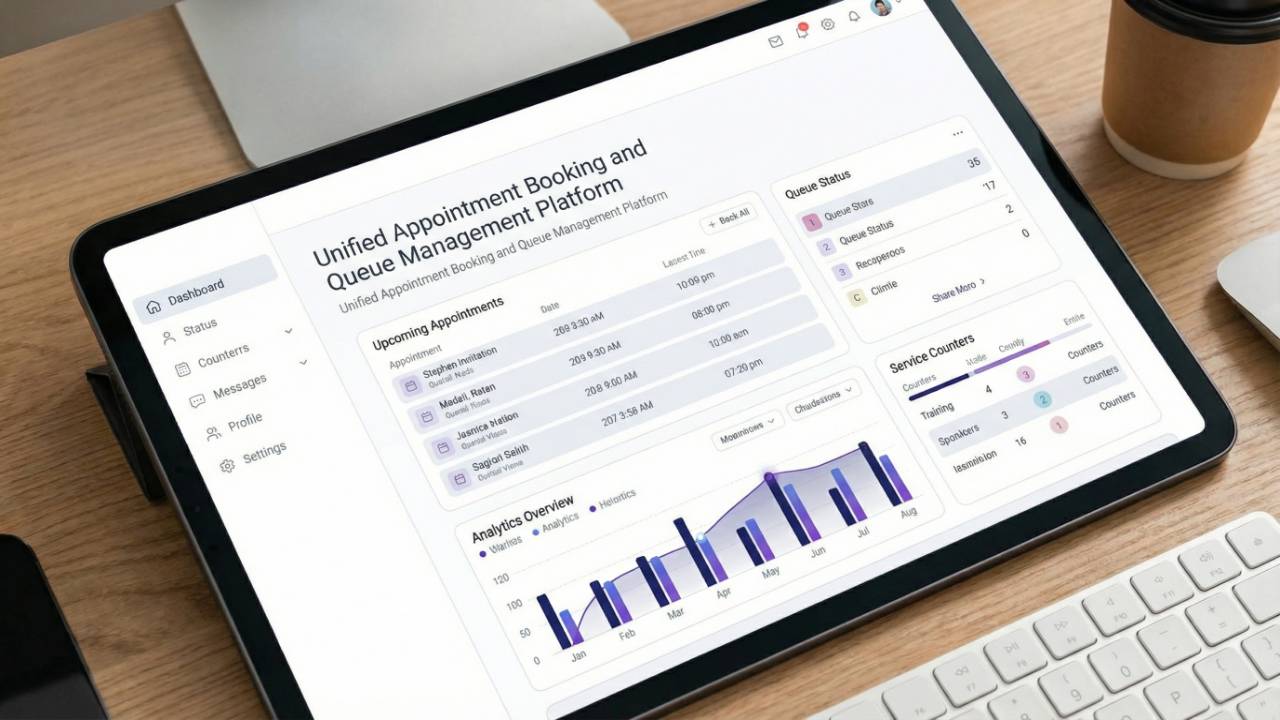
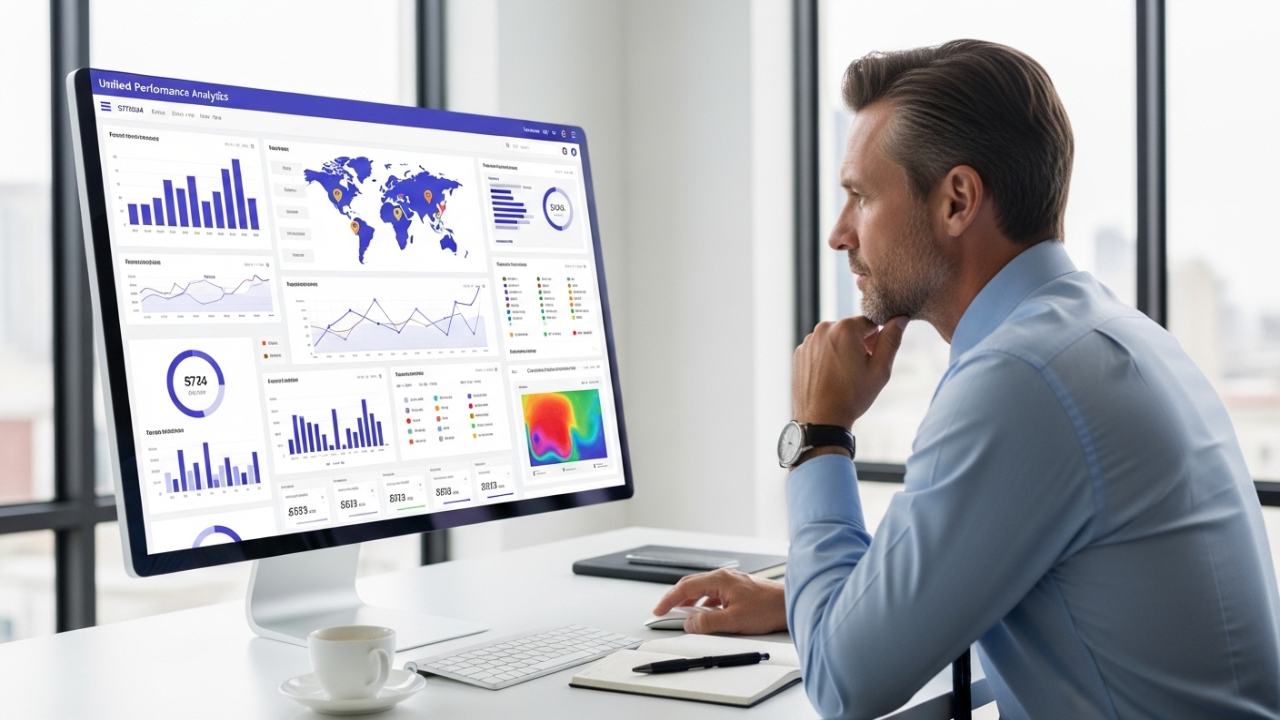
| What You Measure | Old Way (Separate Systems) | New Way (Unified Platform) |
| Tomorrow's demand | Partial guess | Actual appointments + predicted walk-ins |
| Staff efficiency | No clear data | Exact utilization percentage |
| Wait time accuracy | Often wrong by 20+ minutes | Usually accurate within 5 minutes |
| Revenue lost to no-shows | Unknown | Tracked and recoverable |
| Customer journey | Fragmented data | Complete view from booking to service |
Tips to Optimize Online Appointment Scheduling for Your Business Growth

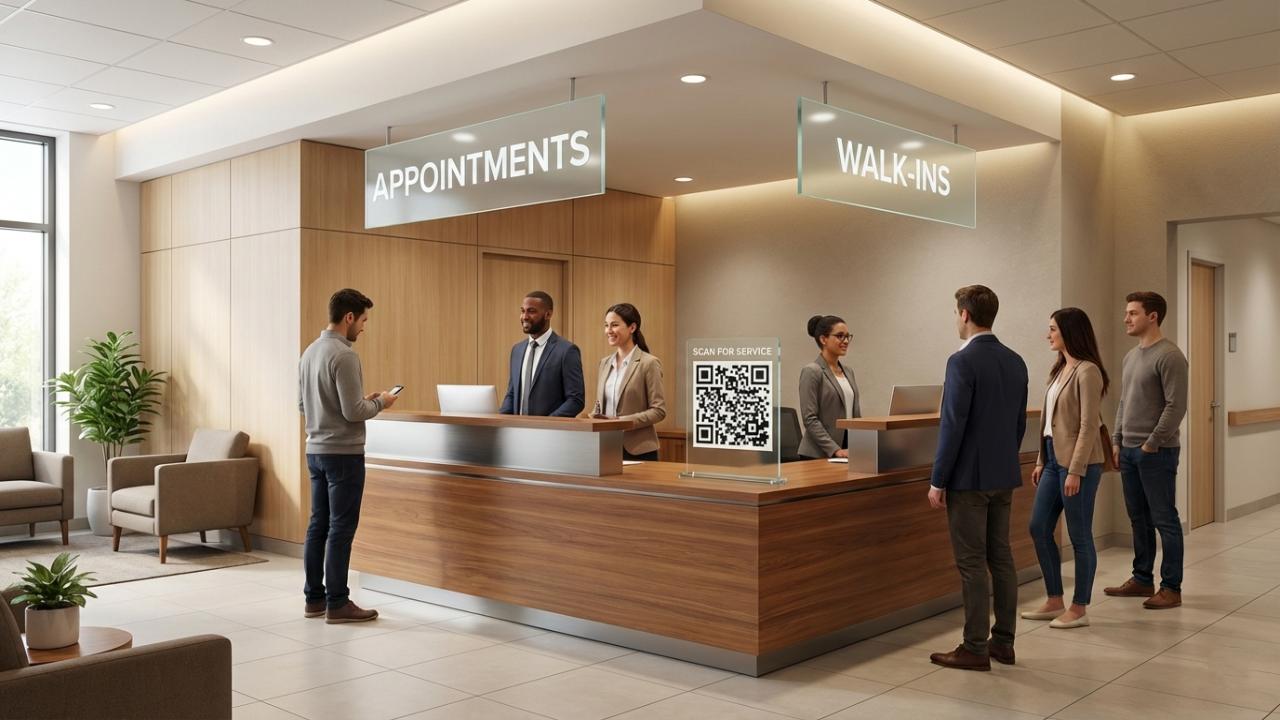
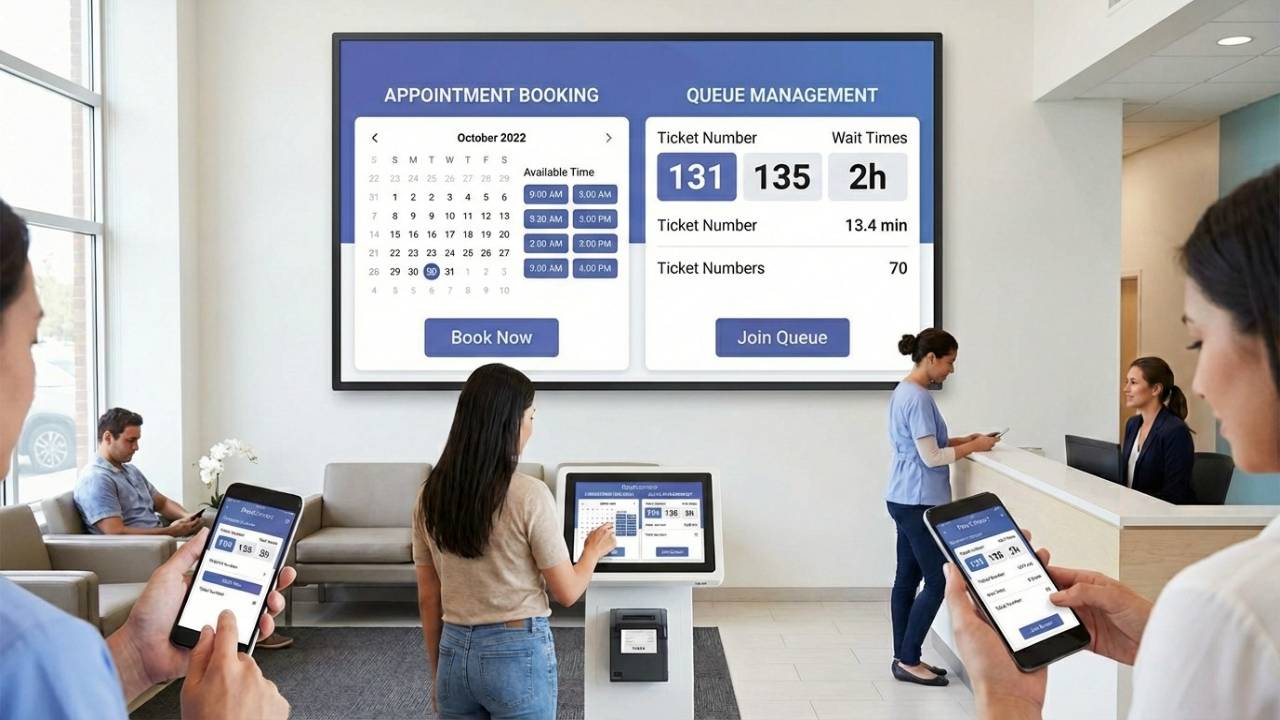
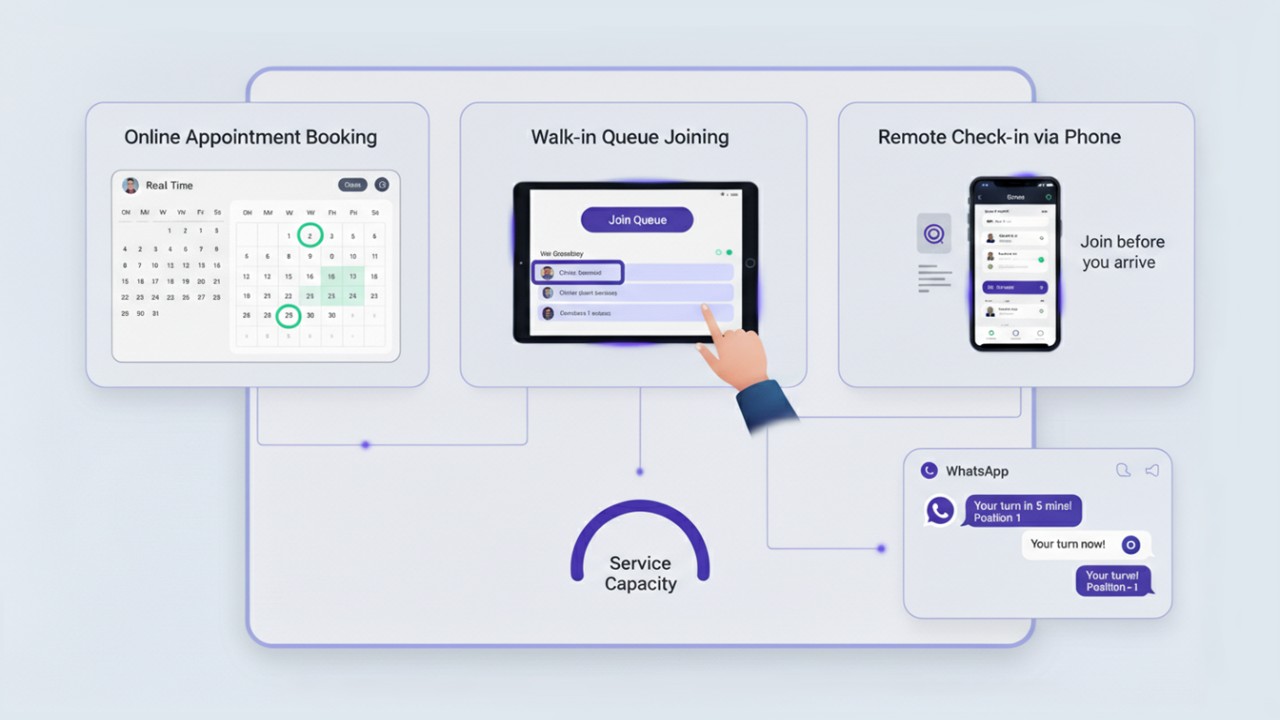
A unified appointment and queue system connects booked appointments and walk-in customers into one shared workflow. This allows businesses to fill empty slots automatically, predict wait times more accurately, and improve staff utilization. For example, when an appointment cancels, the system can instantly call the next walk-in instead of leaving capacity unused.
Scheduled visits and walk-ins flow through one system, reducing idle time, balancing workloads, and giving teams real-time visibility to serve more customers without operational chaos.
Yes. A unified flow prioritizes arrivals intelligently, distributes service slots dynamically, and prevents overbooking, so customers spend less time waiting and more time being served.
Double bookings, overcrowded lobbies, idle staff gaps, poor forecasting, and fragmented data. Teams lose visibility, customers face inconsistent experiences, and decision-making relies on guesswork instead of insight.
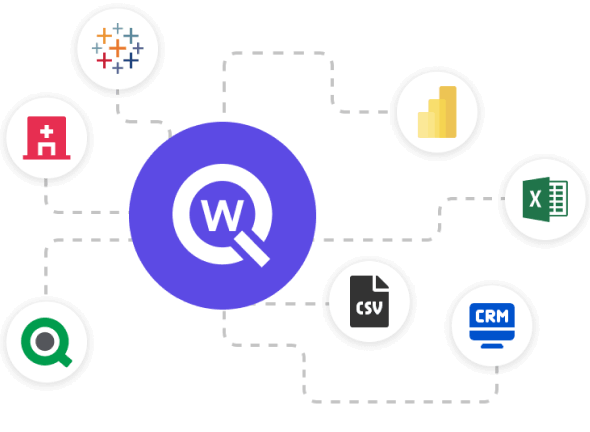
Real-time capacity control, omnichannel booking, walk-in prioritization, analytics dashboards, CRM integrations, self-service check-in, automated notifications, and scalability across locations and service types.
With modern APIs, it’s typically straightforward. The complexity depends on legacy architecture, but enterprise-ready platforms support phased deployment, minimizing disruption while preserving data continuity.
Start with workflow mapping, unify data sources, deploy integrations in stages, train frontline teams, and track performance metrics. A structured rollout ensures continuity while transforming visibility, efficiency, and customer experience.