


Deliver fast, reliable service with a cloud system that updates in real-time and scales with your business.

Control your data and infrastructure with a secure, offline-ready solution tailored for complex environments.

Empower customers to check in, book, or update their appointments without staff assistance.

Deliver fast, secure access for repeat visitors using AI-powered facial recognition.
 Banking
Streamline customer flow and reduce wait times in banks and financial institutions.
 Healthcare
Refine patient check-ins and improve healthcare service.
 Public
Sector
Public
Sector
Manage citizen services smoothly in government offices and public institutions.
 Retail
Improve shopping experiences by minimizing checkout lines and wait times.
 DMV
DMV
Organize customer service queues in automotive showrooms and service centers.
 Airport
Speed up passenger processing with efficient queue management at terminals.
All Industries → AI Appointment Booking System
Automate appointment scheduling with AI-powered booking, smart reminders, and seamless customer check-ins.
 Appointment
Booking
Appointment
Booking
Offer flexible scheduling that helps customers plan their visit and avoid peak-time congestion.
 Biometric
System
Biometric
System
Speed up identity verification and check-ins using facial or fingerprint recognition.
 Automation
Automate workflows and reduce manual tasks with smart queue solutions.
 Virtual
Queuing
Virtual
Queuing
Let customers wait from anywhere home, car, or cafe with mobile-based virtual queues.
 Visitor
Management
Visitor
Management
Track and manage visitor entry, exit, and ID verification from a single dashboard.
 Video
Queue
Video
Queue
Allow people to join video calls instantly with one link—no apps, Accessible on any browser.
 Tele-Consultation
Offer seamless virtual consultations with real-time communication tool.
All Solutions →
Watch quick product demos and tutorials to understand how Qwaiting works for your business.

Read expert insights, tips, and industry trends to enhance customer experience.

Download in-depth guides and resources to explore queue management best practices.

Explore Qwaiting in a quick interactive demo, no signup needed.
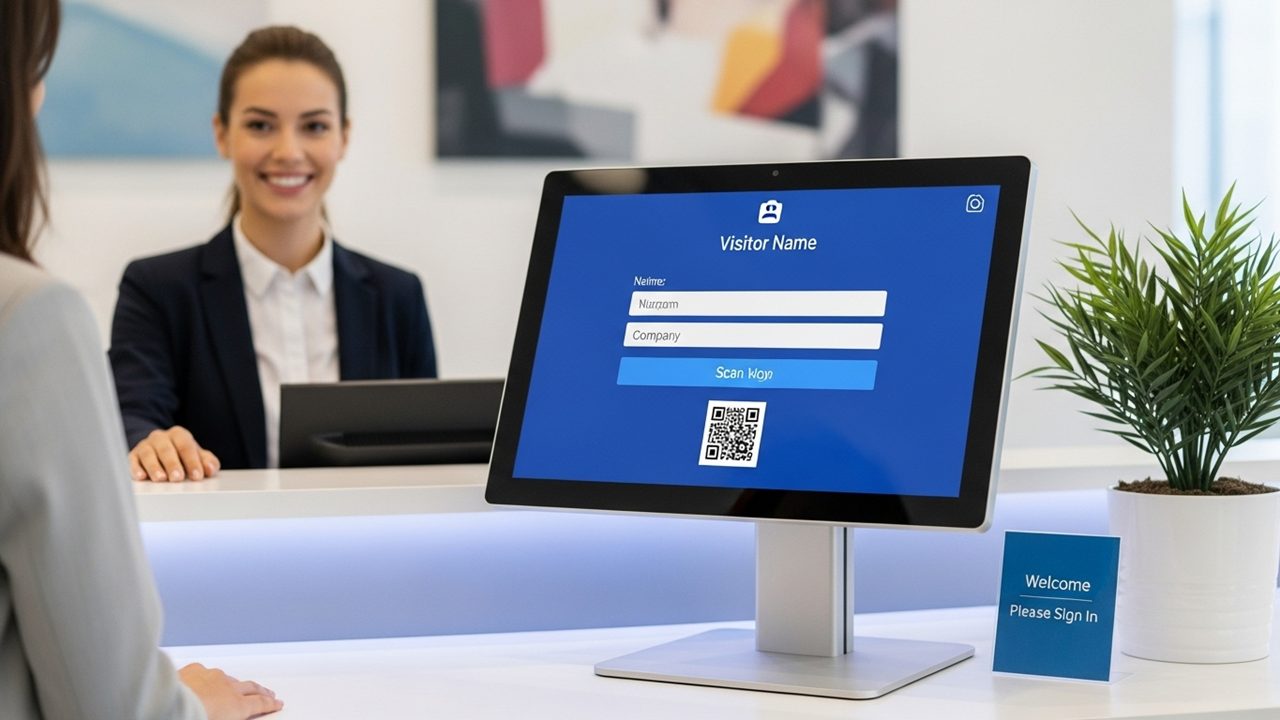
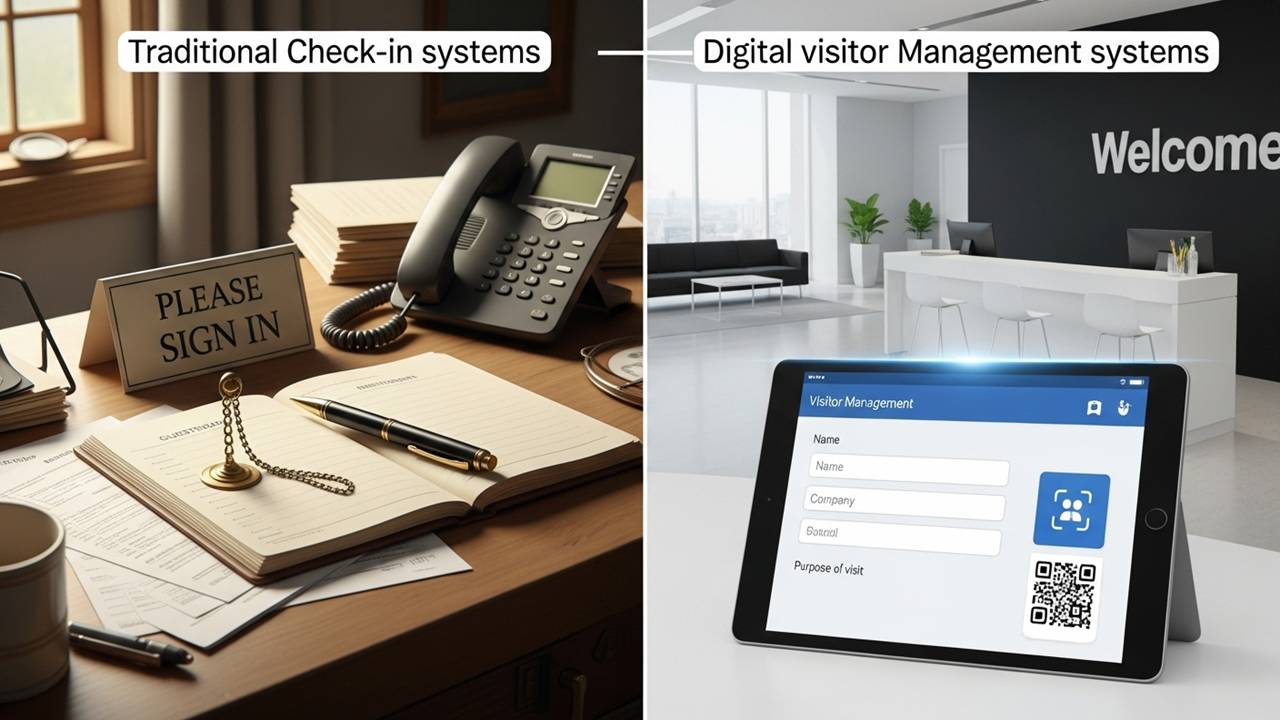
| Aspect | Manual/Paper Logs | Digital Visitor Management System |
| Security Risk | No ID verification, poor audit trails | Identity verification, real-time alerts |
| Compliance | Incomplete records, hard to retrieve | Complete logs, instant reporting |
| Time per Visitor | 8–12 minutes (manual entry, calls) | 1–3 minutes (self-service, automation) |
| Scalability | Breaks under volume or multi-location | Scales seamlessly across sites |
| Data & Insights | None—just paper | Visitor trends, peak hours, compliance gaps |
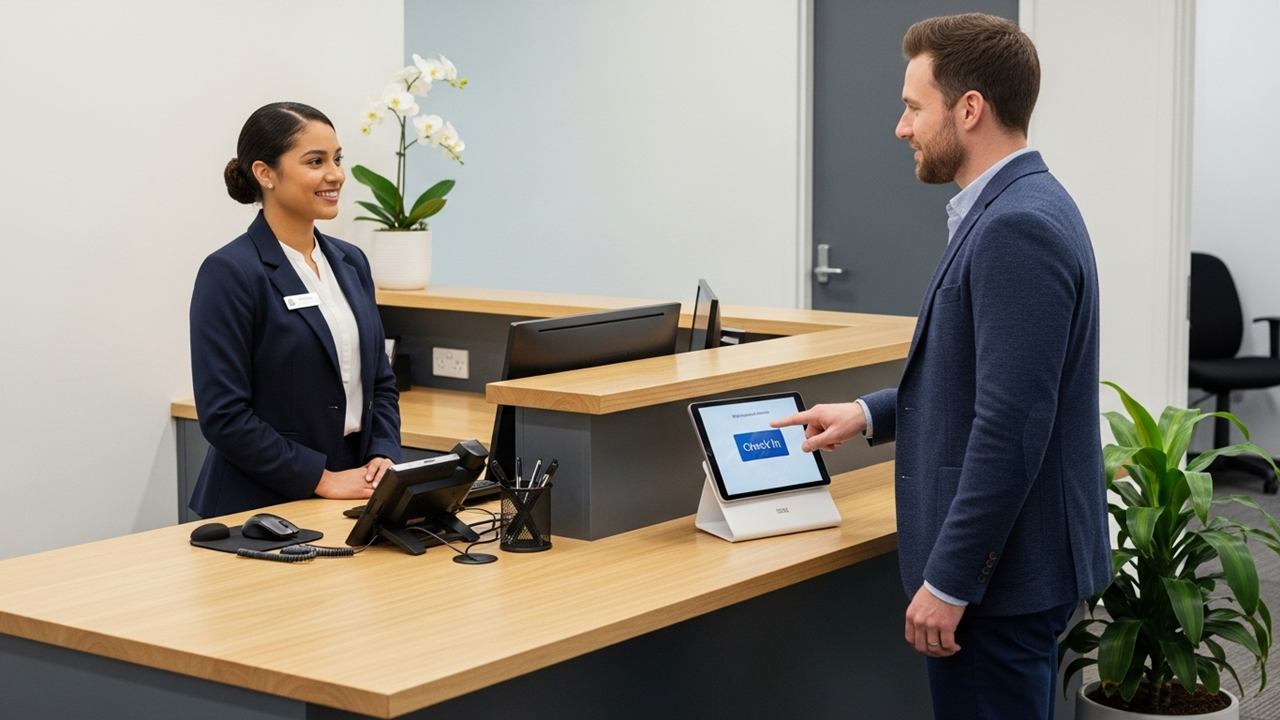
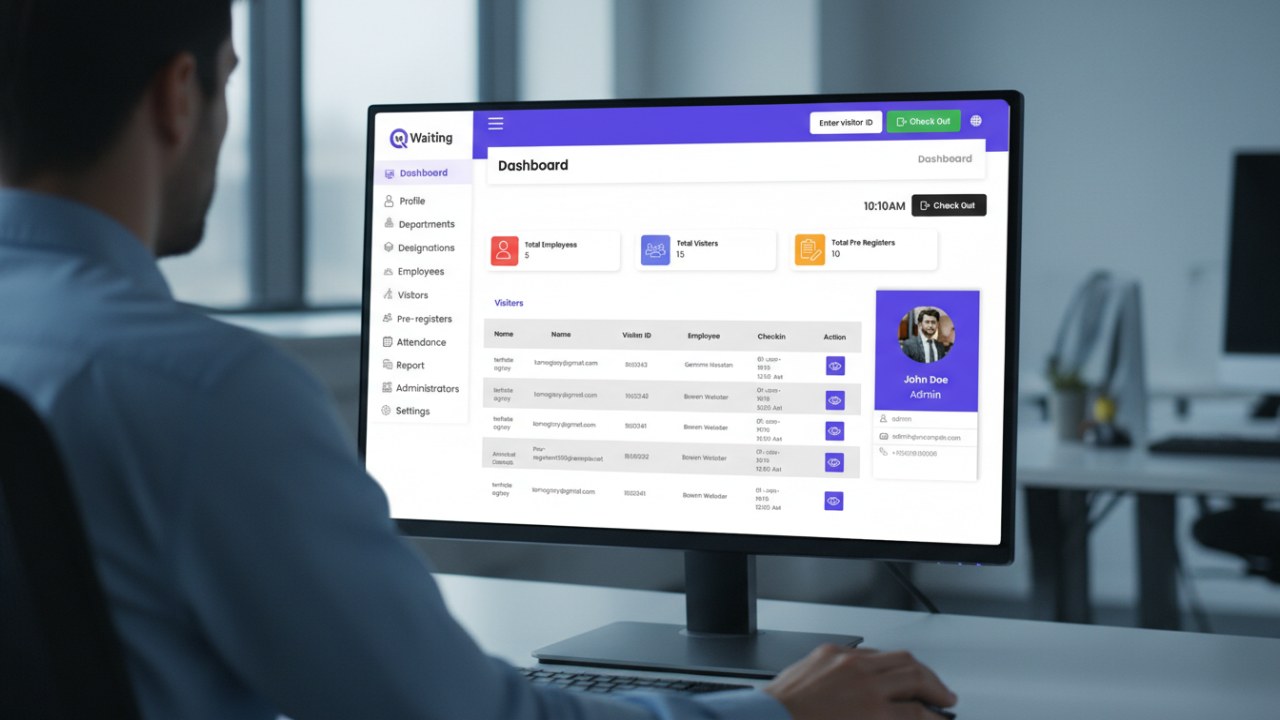
A Detailed Guide to Visitor Management Systems for Secure and Scalable Entry
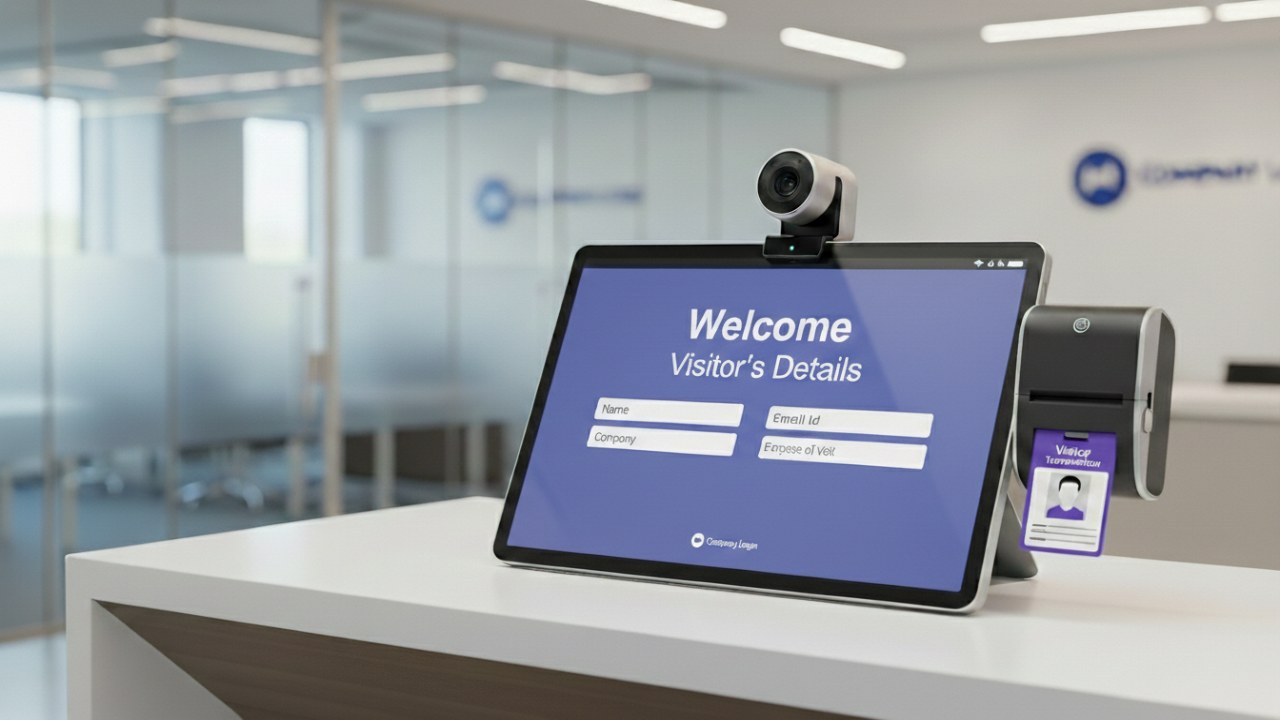
The following table shows the difference between paying a low price for software today and investing in a system that helps a business grow and stay safe over time.
| Evaluation Factor | Low-Cost Tool | Enterprise Platform |
| Initial Investment | Lower | Higher |
| Scalability | Limited—requires replacement | Built to grow with complexity |
| Integration Effort | Manual workarounds, fragmented data | Native integrations, unified data |
| Training & Adoption | Varies—often clunky UX | Intuitive, minimal training required |
| Long-Term ROI | Costly to switch or expand | Scales seamlessly, reduces future friction |
A visitor management system (VMS) tracks, verifies, and manages everyone entering a facility. Businesses use it to improve security, reduce wait times, maintain compliance, and deliver a professional first impression at every location.
It verifies visitor identity, records entry and exit data, and creates tamper-proof logs. This helps organizations meet compliance requirements, respond faster to incidents, and maintain full visibility during audits or emergencies.
Leaders should prioritize scalability, security, ease of use, integrations, and actionable insights. The right system must support growth, reduce operational risk, and deliver long-term value beyond basic visitor check-ins.
A check-in app only records names while visitor management software controls access, automates workflows, ensures compliance, and provides insights—making it suitable for enterprise environments and regulated industries.
Yes. Modern systems integrate with access control, security platforms, and scheduling tools to automate approvals, restrict access, and maintain consistent security policies across locations.
Industries with high traffic or strict security needs benefit most: corporate offices, healthcare, government, banking, education, and large enterprises managing multiple locations or sensitive environments.