


Deliver fast, reliable service with a cloud system that updates in real-time and scales with your business.

Control your data and infrastructure with a secure, offline-ready solution tailored for complex environments.

Empower customers to check in, book, or update their appointments without staff assistance.

Deliver fast, secure access for repeat visitors using AI-powered facial recognition.
 Banking
Streamline customer flow and reduce wait times in banks and financial institutions.
 Healthcare
Refine patient check-ins and improve healthcare service.
 Public
Sector
Public
Sector
Manage citizen services smoothly in government offices and public institutions.
 Retail
Improve shopping experiences by minimizing checkout lines and wait times.
 DMV
DMV
Organize customer service queues in automotive showrooms and service centers.
 Airport
Speed up passenger processing with efficient queue management at terminals.
All Industries → AI Appointment Booking System
Automate appointment scheduling with AI-powered booking, smart reminders, and seamless customer check-ins.
 Appointment
Booking
Appointment
Booking
Offer flexible scheduling that helps customers plan their visit and avoid peak-time congestion.
 Biometric
System
Biometric
System
Speed up identity verification and check-ins using facial or fingerprint recognition.
 Automation
Automate workflows and reduce manual tasks with smart queue solutions.
 Virtual
Queuing
Virtual
Queuing
Let customers wait from anywhere home, car, or cafe with mobile-based virtual queues.
 Visitor
Management
Visitor
Management
Track and manage visitor entry, exit, and ID verification from a single dashboard.
 Video
Queue
Video
Queue
Allow people to join video calls instantly with one link—no apps, Accessible on any browser.
 Tele-Consultation
Offer seamless virtual consultations with real-time communication tool.
All Solutions →
Watch quick product demos and tutorials to understand how Qwaiting works for your business.

Read expert insights, tips, and industry trends to enhance customer experience.

Download in-depth guides and resources to explore queue management best practices.

Explore Qwaiting in a quick interactive demo, no signup needed.
| Criteria | Manual Scheduling | Predictive Scheduling |
| Decision Basis | Intuition | Real-time queue data |
| Accuracy | Low | High |
| Adaptability | Limited | Dynamic |
| Employee Morale | Inconsistent | Balanced & Fair |
| Customer Wait Time | Long | Optimized |
Why traditional queue management no longer works?
| Metric | Before | After |
| Average Wait Time | 15 mins | 7 mins |
| Staff Utilization | 68% | 89% |
| Customer Satisfaction | 74% | 92% |
| Operational Cost | High | Reduced by 25% |
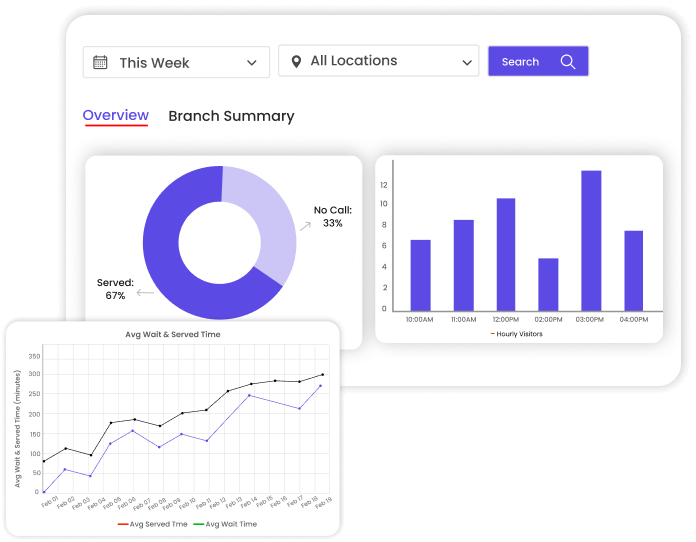
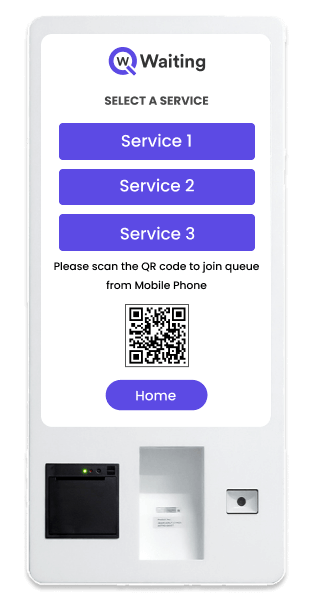
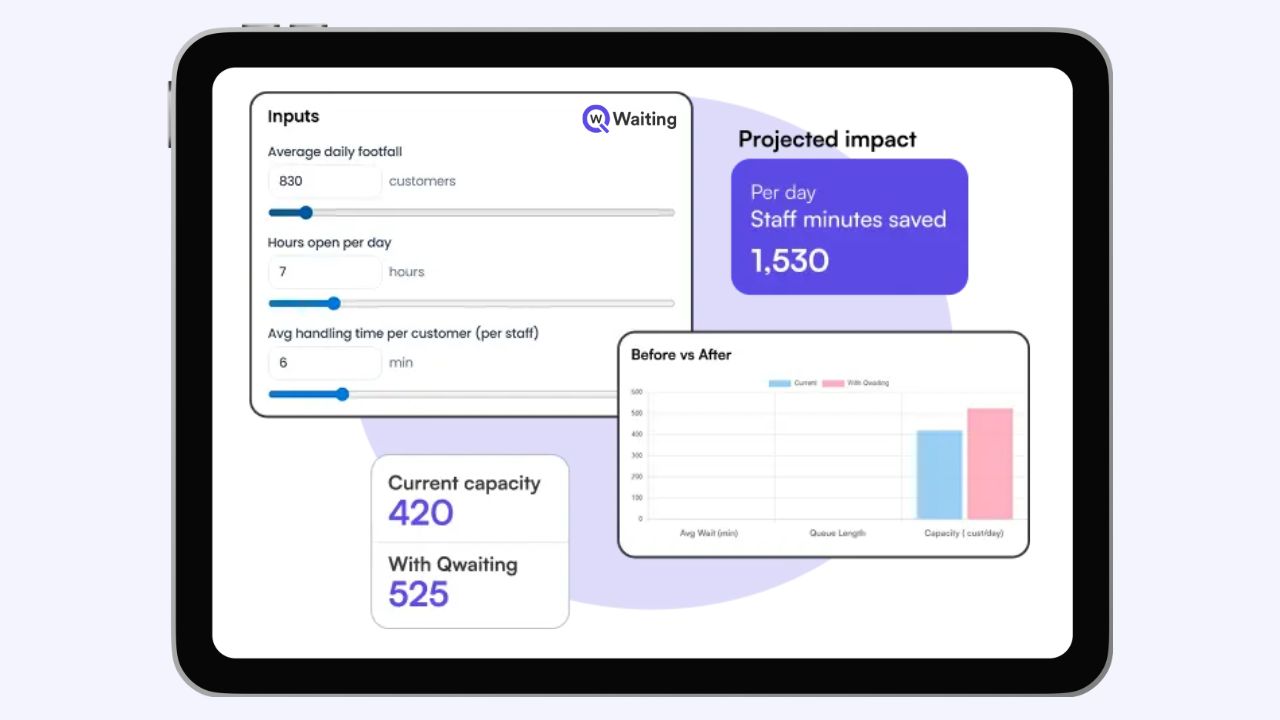
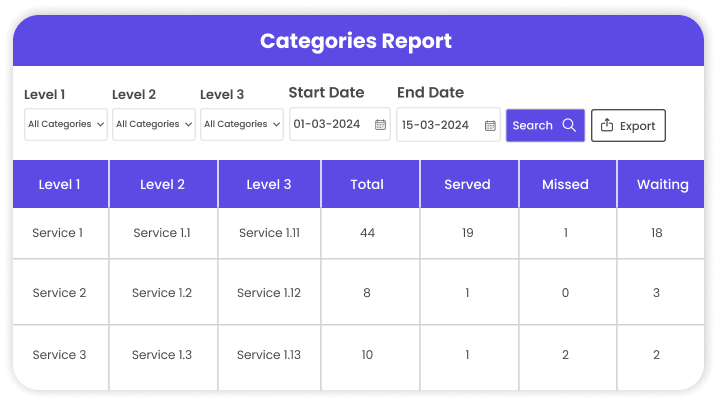
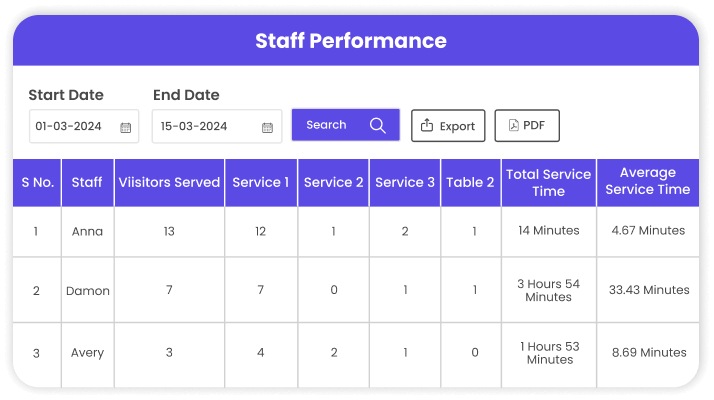
The staff scheduling is based on the real-time customer flow trends, and it allows the allocation of the appropriate number of employees at the appropriate time to ensure smoother operations, reduced wait time, and a more balanced workload.
The information about queues will give insights regarding the rising and the falling of demand, thus enabling teams to schedule shifts based on the actual traffic rather than guesswork. The result is accurate staffing, lowering bottlenecks, and overall improved service performance.
Static schedules rely on assumptions, not real demand. With unpredictable customer behavior and peak surges, outdated methods cause understaffing, burnout, unnecessary idle time, and a disconnected customer experience.
Industries that experience varying foot traffic, including healthcare, retail, banking, government services, hospitality, and telecom, benefit the most as real-time queue data enables them to align the size of the workforce to the customer demand.
Yes. By matching the supply with the real customer flows, the businesses will save on overstaffing, overtime, and the allocation of resources, which will translate into quantifiable savings and enhanced service efficiency.