


Deliver fast, reliable service with a cloud system that updates in real-time and scales with your business.

Control your data and infrastructure with a secure, offline-ready solution tailored for complex environments.

Empower customers to check in, book, or update their appointments without staff assistance.

Deliver fast, secure access for repeat visitors using AI-powered facial recognition.
 Banking
Streamline customer flow and reduce wait times in banks and financial institutions.
 Healthcare
Refine patient check-ins and improve healthcare service.
 Public
Sector
Public
Sector
Manage citizen services smoothly in government offices and public institutions.
 Retail
Improve shopping experiences by minimizing checkout lines and wait times.
 DMV
DMV
Organize customer service queues in automotive showrooms and service centers.
 Airport
Speed up passenger processing with efficient queue management at terminals.
All Industries → AI Appointment Booking System
Automate appointment scheduling with AI-powered booking, smart reminders, and seamless customer check-ins.
 Appointment
Booking
Appointment
Booking
Offer flexible scheduling that helps customers plan their visit and avoid peak-time congestion.
 Biometric
System
Biometric
System
Speed up identity verification and check-ins using facial or fingerprint recognition.
 Automation
Automate workflows and reduce manual tasks with smart queue solutions.
 Virtual
Queuing
Virtual
Queuing
Let customers wait from anywhere home, car, or cafe with mobile-based virtual queues.
 Visitor
Management
Visitor
Management
Track and manage visitor entry, exit, and ID verification from a single dashboard.
 Video
Queue
Video
Queue
Allow people to join video calls instantly with one link—no apps, Accessible on any browser.
 Tele-Consultation
Offer seamless virtual consultations with real-time communication tool.
All Solutions →
Watch quick product demos and tutorials to understand how Qwaiting works for your business.

Read expert insights, tips, and industry trends to enhance customer experience.

Download in-depth guides and resources to explore queue management best practices.

Explore Qwaiting in a quick interactive demo, no signup needed.
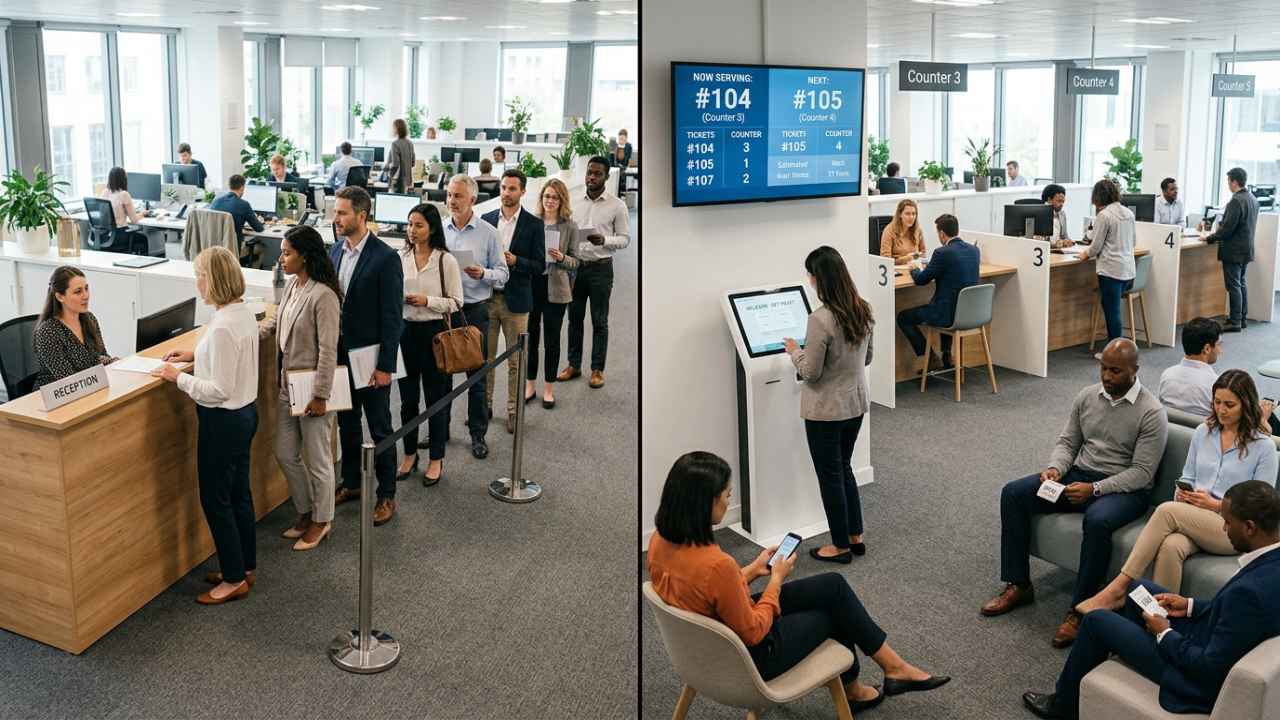
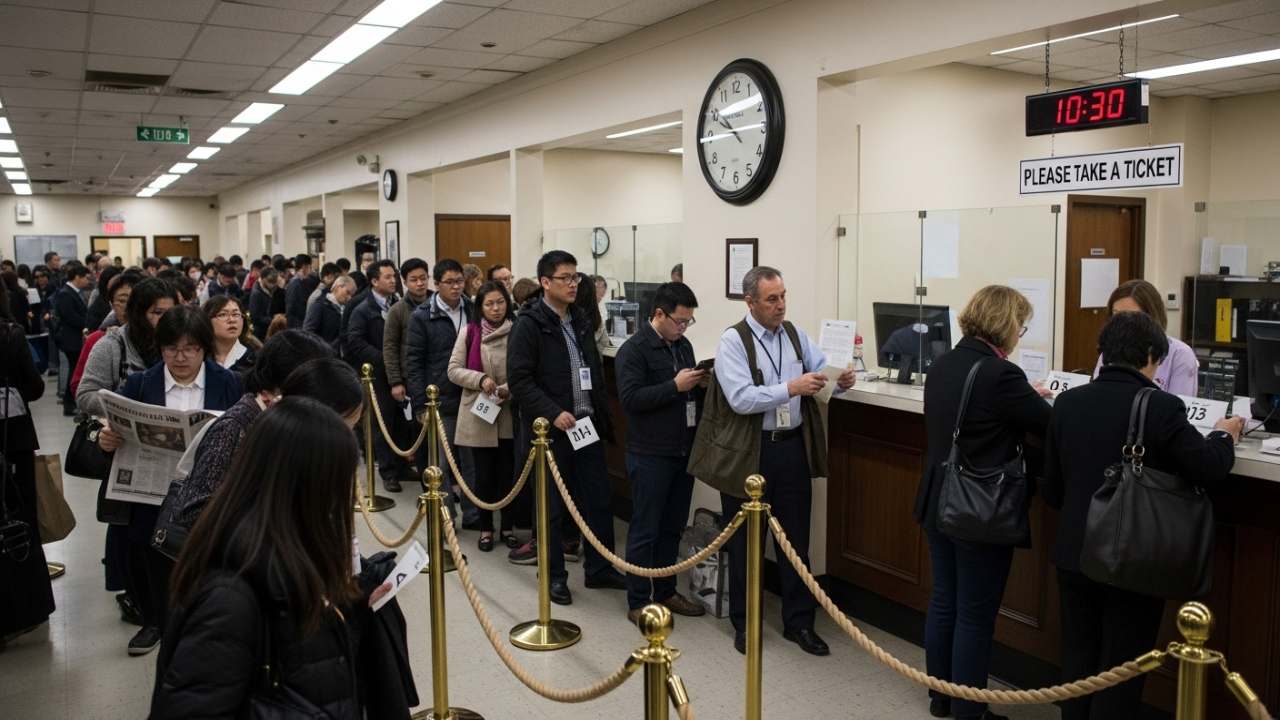
why traditional queue management fails in 2025Here’s how (in a shell) traditional queue systems lack in 2026 as compared to an AI-powered queue solution:
| Feature | Traditional Queue Systems | AI-Powered Queue Intelligence |
| Service Routing | Fixed rules | Intelligent dynamic routing |
| Wait Time Prediction | Basic estimates | Real-time predictive analysis |
| Staff Allocation | Manual | AI-assisted |
| Customer Experience | Reactive | Proactive |
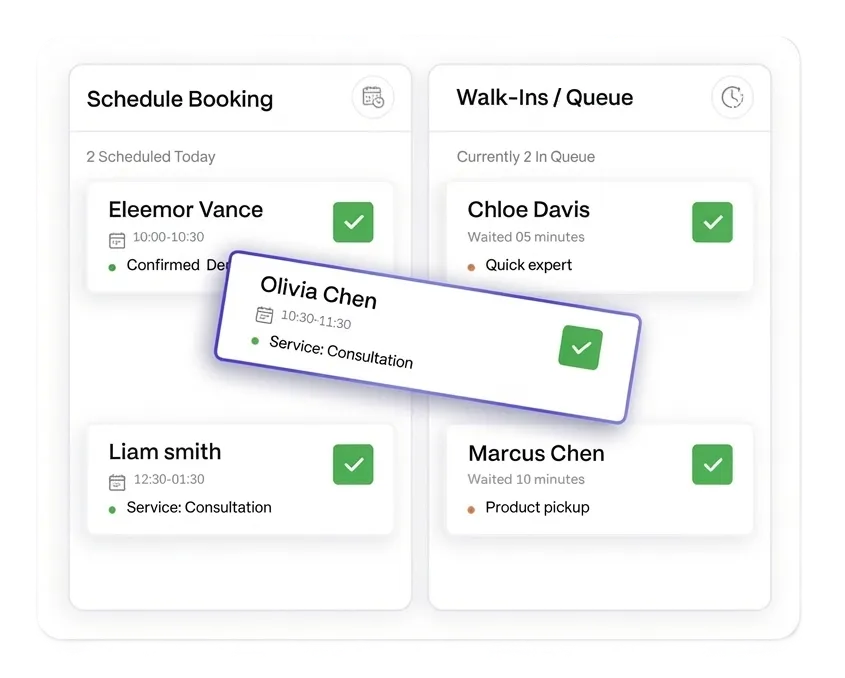
"After implementing intelligent queue routing, we reduced customer wait times by nearly 40% while improving service team productivity by 30%."
Here’s what businesses noticed before and after implementing a smart queue solution into their business:
| Business Metric | Before AI Queue Intelligence | After Implementation |
| Average Wait Time | High, unpredictable | Reduced, consistent |
| Customer Satisfaction | Variable | Measurably improved |
| Service Efficiency | Reactive, manually managed | Proactive, data-driven |
| Staff Utilisation | Uneven, often inefficient | Optimised across shifts |
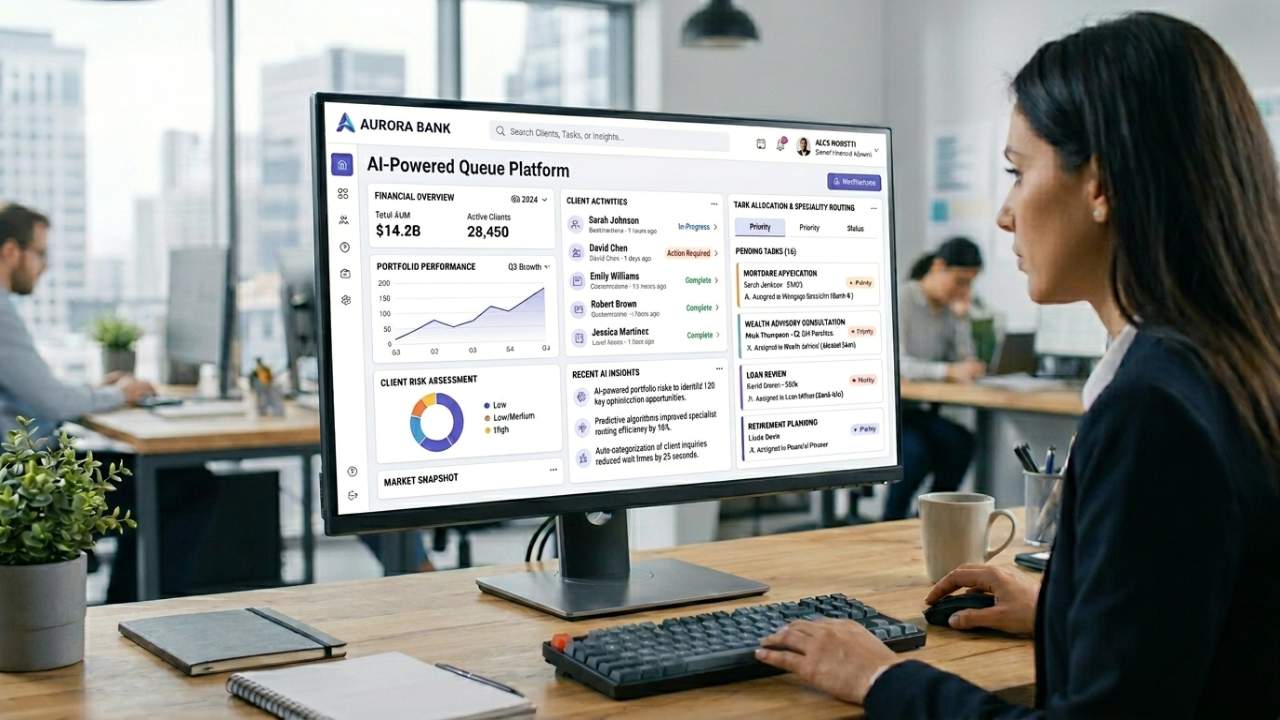
queue management systems for banks
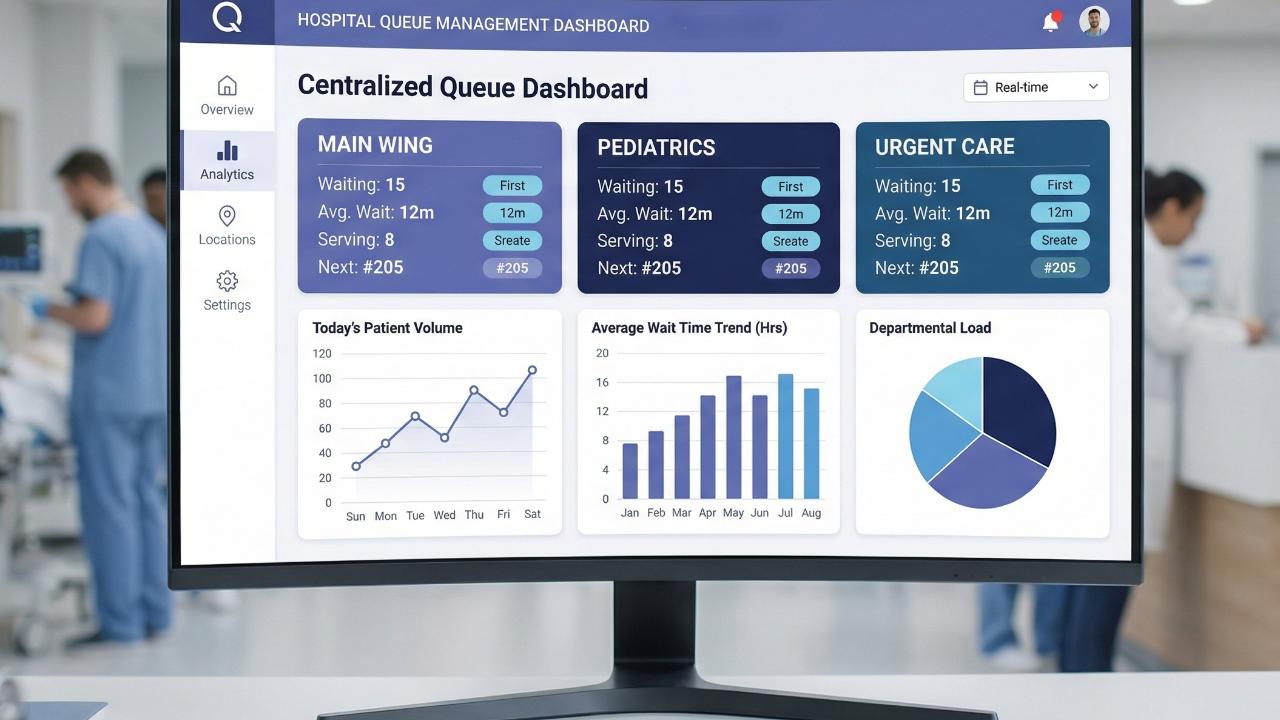
queue management in hospitals and healthcare facilities
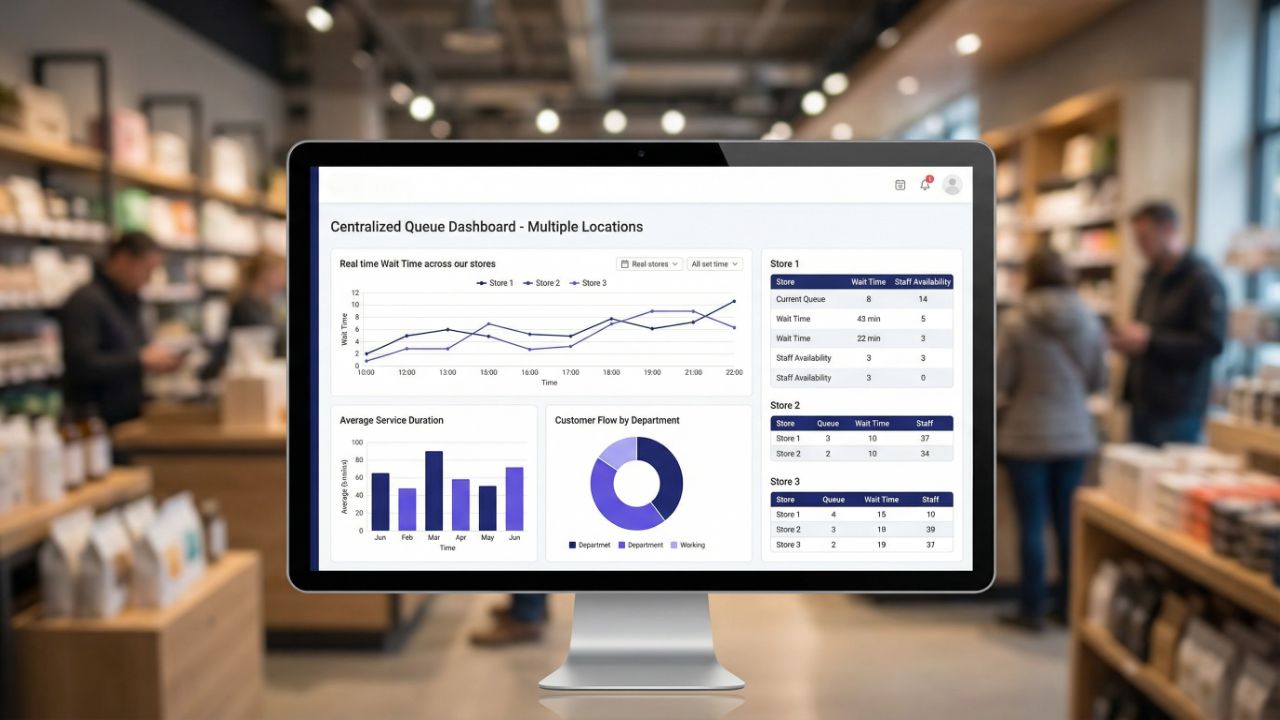
Retail Queue Management: Converting Wait Time into Sales Opportunities
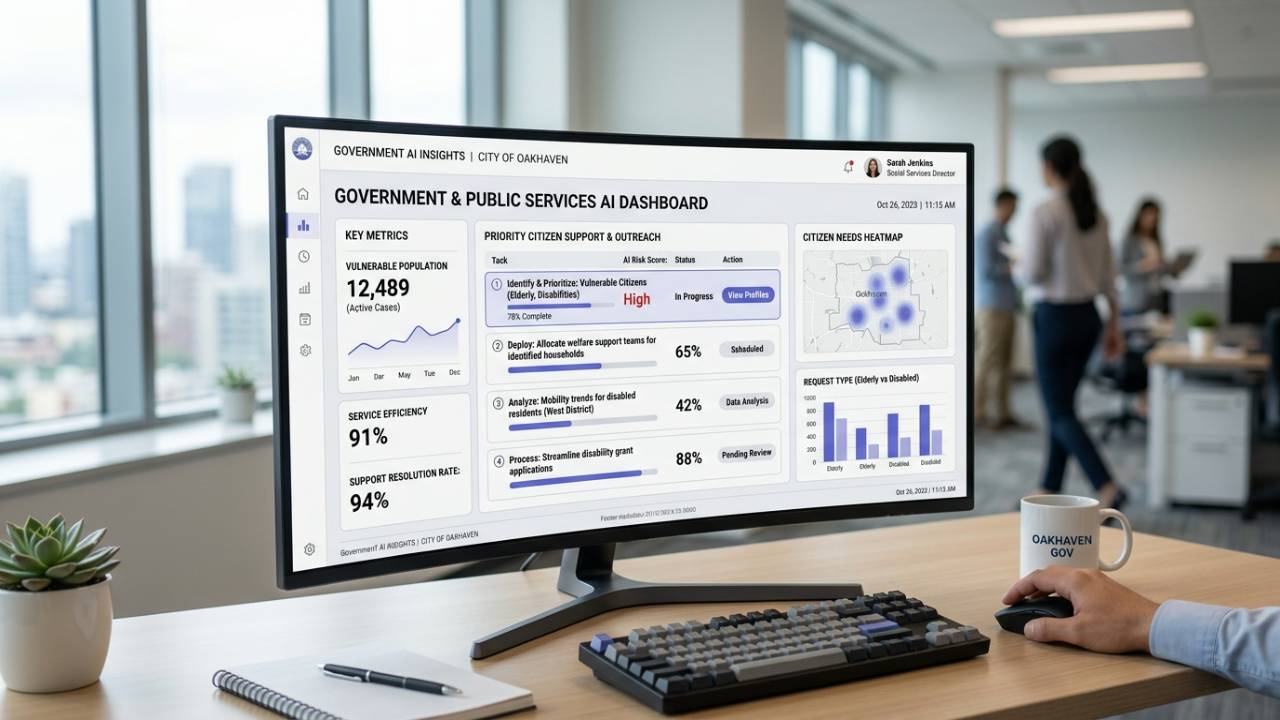
Here’s what challenges different industries faced and how AI-enabled smart intelligence helped:
| Industry | Key Challenge | AI Queue Intelligence Benefit |
| Banking | Service complexity | Intelligent routing |
| Healthcare | Patient flow | Priority management |
| Retail | Peak traffic | Queue optimization |
| Government | High service demand | Efficient citizen service |
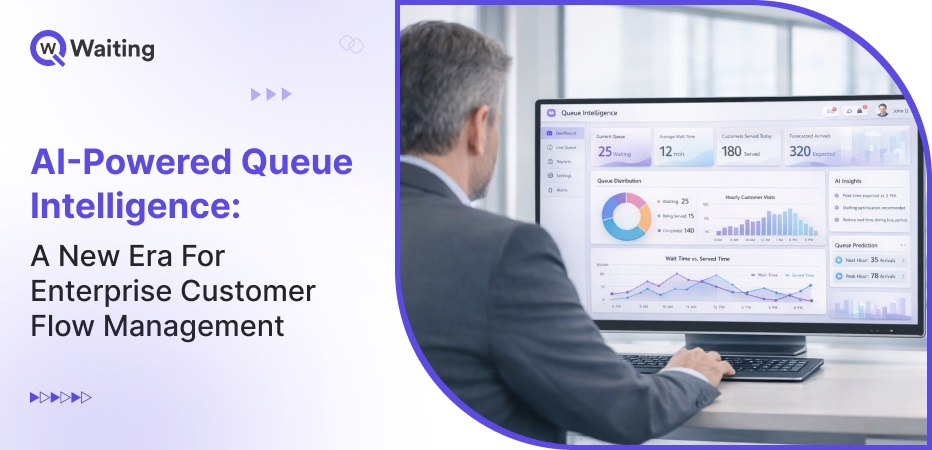
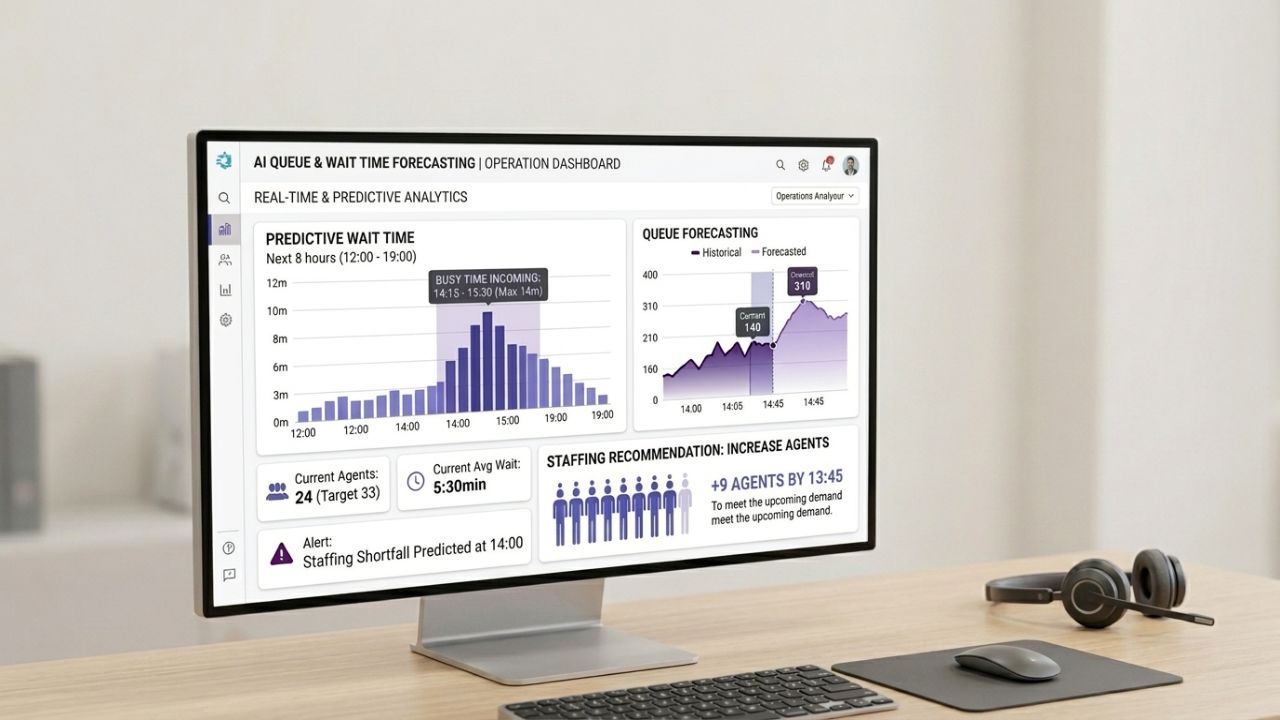
AI-powered queue intelligence uses data, real-time analytics, and machine learning to understand customer flow, predict wait times, and route visitors efficiently. It helps businesses turn traditional waiting lines into smarter, faster, and more organized service experiences.
AI analyzes visitor patterns, peak hours, and service times to balance queues automatically. This reduces bottlenecks, distributes customers more evenly across staff, and keeps operations running smoothly even during busy periods.
AI studies historical data, real-time queue length, and average service time. By combining these signals, it estimates how long each customer will wait and updates predictions instantly as conditions change.
AI routes customers to the right staff member based on request type, availability, and skill set. Instead of random assignment, each visitor is directed to the best available service point for faster and more accurate support.
AI tracks how customers move through a location, identifies slow points, and adjusts queue distribution automatically. This keeps lines shorter, improves staff utilization, and ensures customers move through the service journey without unnecessary delays.
Enterprises want faster service, better insights, and smoother operations. AI-driven queue systems reduce wait times, reveal customer behavior patterns, and help organizations handle higher visitor volumes without increasing staff or infrastructure.