


Deliver fast, reliable service with a cloud system that updates in real-time and scales with your business.

Control your data and infrastructure with a secure, offline-ready solution tailored for complex environments.

Empower customers to check in, book, or update their appointments without staff assistance.

Deliver fast, secure access for repeat visitors using AI-powered facial recognition.
 Banking
Streamline customer flow and reduce wait times in banks and financial institutions.
 Healthcare
Refine patient check-ins and improve healthcare service.
 Public
Sector
Public
Sector
Manage citizen services smoothly in government offices and public institutions.
 Retail
Improve shopping experiences by minimizing checkout lines and wait times.
 DMV
DMV
Organize customer service queues in automotive showrooms and service centers.
 Airport
Speed up passenger processing with efficient queue management at terminals.
All Industries → AI Appointment Booking System
Automate appointment scheduling with AI-powered booking, smart reminders, and seamless customer check-ins.
 Appointment
Booking
Appointment
Booking
Offer flexible scheduling that helps customers plan their visit and avoid peak-time congestion.
 Biometric
System
Biometric
System
Speed up identity verification and check-ins using facial or fingerprint recognition.
 Automation
Automate workflows and reduce manual tasks with smart queue solutions.
 Virtual
Queuing
Virtual
Queuing
Let customers wait from anywhere home, car, or cafe with mobile-based virtual queues.
 Visitor
Management
Visitor
Management
Track and manage visitor entry, exit, and ID verification from a single dashboard.
 Video
Queue
Video
Queue
Allow people to join video calls instantly with one link—no apps, Accessible on any browser.
 Tele-Consultation
Offer seamless virtual consultations with real-time communication tool.
All Solutions →
Watch quick product demos and tutorials to understand how Qwaiting works for your business.

Read expert insights, tips, and industry trends to enhance customer experience.

Download in-depth guides and resources to explore queue management best practices.

Explore Qwaiting in a quick interactive demo, no signup needed.
Whether it's experiencing a long queue at a store, a delay in customer service response, dealing with a slow-loading website, or more. These moments of waiting can quickly lead to frustration & disappointment for customers, which leads to the risk of losing a valuable clientele base. Fortunately, in this dynamic era where customer satisfaction is paramount, businesses have developed proven strategies to effectively manage customer wait times. By implementing these strategies, businesses can make a balance between customer expectations and operational efficiency, ensuring a positive experience for both parties involved. In this write-up, we will explore innovative techniques that can transform waiting into an opportunity for engagement, loyalty, and overall customer delight.
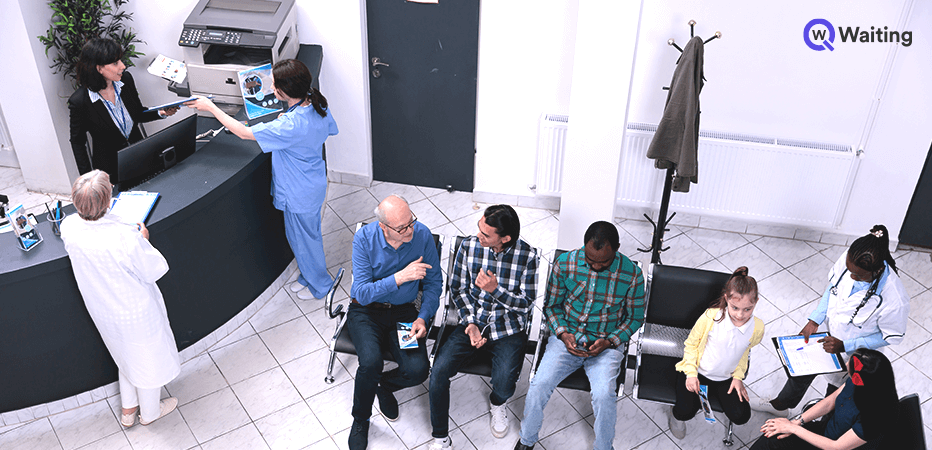
Also, design the waiting room in a way that respects customers' privacy and personal space. Provide dividers between each seating area to create a sense of privacy & ensure that seats are not too close together to avoid overcrowding. Use warm lighting fixtures and create a soothing ambiance that significantly helps to create a welcoming atmosphere. Ensure the area remains clean and temperature-controlled at all times. Offer complimentary beverages and free Wi-Fi access to customers to make their wait more enjoyable.
It provides real-time updates to customers regarding their queue status and average wait times, which reduces customer frustration. Also, it informs the customers about any delays or changes in the wait time to manage their expectations effectively. The system records historical data to determine the optimal number of staff needed to serve customers seamlessly at different times of the day. So, the staffing levels can be adjusted accordingly to minimize wait times. Additionally, the queue system helps gather customer feedback, identifying areas for improvement and enhancing overall efficiency.
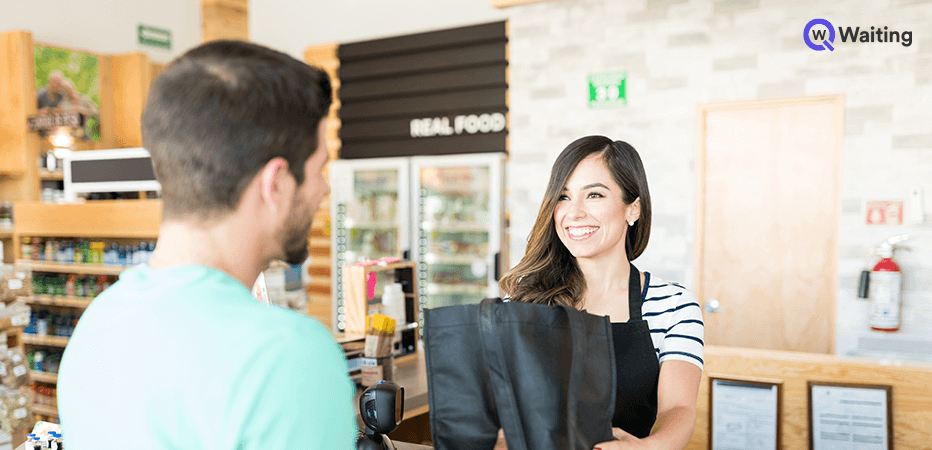
For instance, they can place orders, make reservations, or check account information at their own pace and convenience. By eliminating the need to wait in long queues & interact with staff for simple tasks, customers can save time & have a more streamlined experience. This allows customers to bypass lines and complete their tasks more quickly and efficiently. Moreover, it is crucial to provide clear instructions to customers who may not be familiar with self-service options to prevent any confusion.

They possess the ability to make quick decisions and resolve customer queries efficiently, which ultimately helps to reduce customer overall wait time. Train them in customer service skills, effective communication, conflict resolution, and more for effective outcomes and positive customer experience.
These wait times are regularly updated based on real-time data and are communicated to visitors through mobile apps and signs. By setting clear wait time expectations, the park helps visitors plan their day accordingly and make informed decisions about which rides to prioritize.
One way to achieve this is by providing reading materials like magazines or newspapers for customers to read. It's essential to have a variety of manual genres available on the table to cater to different interests and age groups. Another option is to set up televisions in your waiting area, showcasing entertaining content such as news or interesting videos. Additionally, you can display promotional content related to your products or services to inform and engage customers while they wait.

customer queue management system helps to collect, monitor, track, and analyze data related to customer wait times. By leveraging this system, businesses can gain valuable insights into average wait times, peak hours, and customer feedback. This information enables data-driven decision-making and the optimization of customer wait time management strategies.
The best strategy to manage customer waiting hours is to implement the customer waiting system into the business model. With the help of the system, businesses can automate their operations and enhance customer satisfaction.